
Without Jesus
Case WJ-VII-04 · Branch 4 of 5
THE ATLAS›VII · ARTS & MUSIC›ARCHITECTURE

Architecture

ENGLISH STANDARD VERSION (ESV)

“you yourselves like living stones are being built up as a spiritual house, to be a holy priesthood, to offer spiritual sacrifices acceptable to God through Jesus Christ.”

— Peter · 1 Peter 2:5
VERY HIGH · EVIDENCE GRADEFACTUAL RECORD

Cathedrals redrew the skylines of Europe; the basilica plan entered civic architecture worldwide.
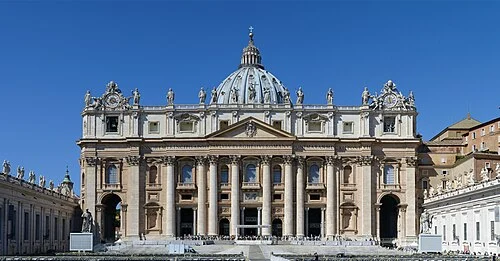
St Peter's — theology in stone
Image credit & licence

Alvesgaspar · CC BY-SA 4.0 · Own work

Original image and licensing

Rome supplied the arch, the vault, and the concrete; the church supplied the reason to spend three centuries of a city's wealth pushing stone higher than anyone had ever pushed it. The cathedral was theology made structural — light, height, and the crowd's awe engineered into a building.

The civic world then borrowed the plan: courthouses, universities, and parliaments sit in basilicas with the theology drained out, which is itself the perfect emblem of several branches of this atlas.

EVIDENCE VS. COUNTERFACTUAL

This label distinguishes a factual historical record from the interpretation built around it. A well-documented event or influence pathway does not prove that no alternative history could produce a similar result. Grade note: the historical record and pathway are especially well established

STRONGEST OBJECTION(S)

Roman engineering supplied the arch and the concrete; the Church supplied the ambition — the division of labor is documented, and both halves are claimed honestly.

The causal chain — tap (i) for detail
01Constantinian basilicas Christian worship in Constantine’s age supported large basilicas and other public religious buildings. Their plans adapted existing forms to new settings and functions. This was an institutional and artistic development within the Roman world, rather than the invention of building, public assembly or monumental space from nothing.
02Gothic engineering as theology in stone Gothic churches brought structural experimentation into spaces for worship, procession and sacred imagery. Height and light could carry religious significance while depending on engineering, skilled labour and patronage. Calling a building theology in stone describes one dimension of its meaning, not a substitute for its material and social history.
03St Peter's (1506–1626) The rebuilding of St Peter’s involved successive patrons, designers and generations of work. Its scale makes the relationship between ecclesiastical power, devotion and architecture especially visible. The basilica is a layered historical achievement, rather than the expression of one designer or an unchanged plan across the entire project.
04Civic and collegiate architecture borrowing the plan Later civic and educational buildings borrowed architectural languages associated with churches, including Gothic forms and arrangements of space. Borrowing could signal continuity, learning or prestige without retaining a liturgical purpose. The influence lies in recognizable design choices, while the new building’s function and political setting may differ substantially.
Modern concepts — what it becomes
The Cathedral Skyline→College Gothic→
Encounter the Gospel invitation →