
Without Jesus
Case WJ-II-03 · Branch 3 of 3
THE ATLAS›II · HUMAN RIGHTS›END OF THE GAMES

End of the Games

ENGLISH STANDARD VERSION (ESV)

“Then Jesus said to him, “Put your sword back into its place. For all who take the sword will perish by the sword.”

— Jesus · Matthew 26:52
MEDIUM · EVIDENCE GRADEFACTUAL RECORD

Christian criticism eroded the moral legitimacy of gladiatorial spectacle until imperial edicts ended it.
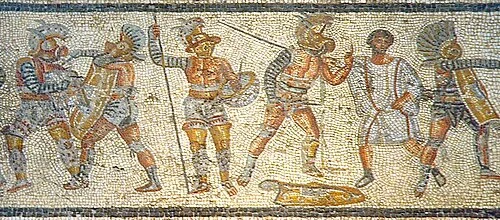
Gladiators — the spectacle a moral argument ended
Image credit & licence

Public domain · Livius.org

Original image and licensing

For centuries, watching people kill each other for sport was the Roman empire's favorite civic ritual. A movement whose founder said “put up again thy sword” refused to attend, wrote against it, and — when its members finally reached the throne — legislated it out of existence. Killing for entertainment became, for the first time anywhere, a scandal.

The grade is medium because the last dated show (c. 404) rests partly on a story written decades later, and because economics was emptying the arenas too. The direction, though, is solid: the moral vocabulary that ended the games was Christian.

EVIDENCE VS. COUNTERFACTUAL

This label distinguishes a factual historical record from the interpretation built around it. A well-documented event or influence pathway does not prove that no alternative history could produce a similar result. Grade note: attribution or causal weight is contested; both sides are stated

STRONGEST OBJECTION(S)

The 404 AD date rests partly on the Telemachus story, which comes from a fifth-century church historian writing decades later; economics and politics were also emptying the arenas. The direction is solid; the dating is soft.

The causal chain — tap (i) for detail
01A teaching that made killing for sport indefensible Christian criticism of killing for entertainment drew on convictions about human life and the obligations of the spectator. Such arguments challenged an established Roman public spectacle. They were one element in a larger history of changing institutions and imperial policy, rather than a single teaching that instantly emptied the arenas.
02Christian refusal and criticism of the arena Refusal to participate and accounts of Christian suffering offered alternatives to the values celebrated in the arena. Martyr narratives could turn attention from the audience’s power to the humanity and witness of the condemned. Their significance lies in this moral reframing, while details of individual accounts still require evaluation.
03Imperial restrictions under Christian emperors Imperial restrictions gave legal force to changes that moral criticism alone could not accomplish. Policies developed across different reigns and circumstances, rather than one uninterrupted abolition campaign. Their Christian context is relevant, but political authority, the organization of spectacles and wider social change also belong in the explanation.
04The last known games (early 5th century) Gladiatorial contests declined and disappeared over time, with the final phase generally associated with the early fifth century. Accounts of particular last events are less secure than the broader change. The atlas traces a contribution to ending a specific institution, without suggesting that Roman violence or public cruelty ended with it.
Sources
§Theodoret of Cyrrhus, Ecclesiastical History (the Telemachus account) — in print · ENTRY REVIEWED 2026-10-02T2 · SCHOLARSHIP
Modern concepts — what it becomes
The Empty Arena→The Martyr Accounts→
Encounter the Gospel invitation →