“The thief comes only to steal and kill and destroy. I came that they may have life and have it abundantly.”
— Jesus · John 10:10
HIGH · EVIDENCE GRADE
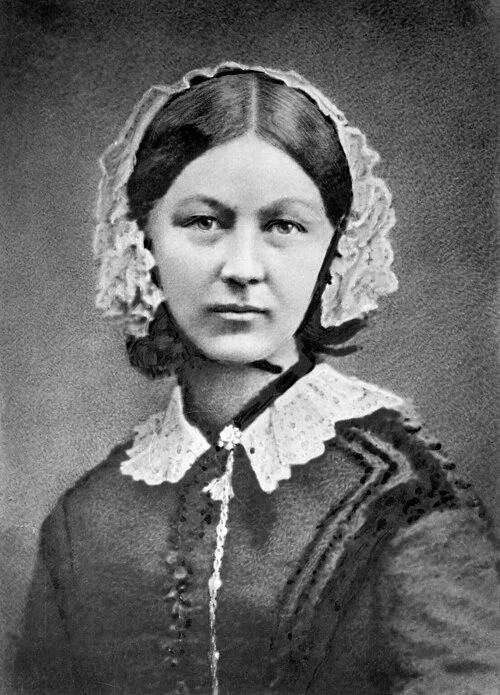
At seventeen she wrote in her private diary that God spoke to her and called her to service; at Scutari she built modern nursing, and then sanitation — and statistics — that saved more lives than the medicine of her day.
Florence Nightingale
Image credit & licence
Henry Hering (1814-1893) · Public domain · NPG x82368 from National Portrait Gallery, London
The record, plainly: her later faith was idiosyncratic and she distrusted religious institutions — the calling was real, the churchmanship is not the claim.
EVIDENCE VS. COUNTERFACTUAL
This is an interpretive synthesis: the sources support elements of the story, but the overall causal weight remains open to historical debate. Grade note: the influence pathway is well documented; replacement remains a separate question
The causal chain — tap (i) for detail
01God called me to serve Him — her diary, February 1837 Nightingale's writings describe a sense of divine calling that helped frame service as a personal obligation. That motivation mattered in her resistance to the expectations surrounding her social position. Her religious outlook was also intellectually distinctive, so a short diary quotation should introduce the question of vocation rather than stand in for a full account of her beliefs.
02Scutari: sanitation defeats infection (1854–56) Work during the Crimean War exposed failures of supply, sanitation and administration that contributed to soldiers' suffering. Nightingale's observations and later analysis helped turn those conditions into a subject for reform. Changes in mortality involved multiple interventions and people, so the account should not assign every improvement to bedside nursing or one person's cleaning efforts.
03The world's first secular nursing school (1860) The training school associated with the Nightingale Fund established a durable way to prepare nurses and spread standards through trained personnel. It joined practical care with education, discipline and institutional expectations. Its influence is substantial without requiring an unqualified claim that no secular nursing instruction existed anywhere before it.
04Statistical diagrams that reformed public health Nightingale used statistical presentation to make patterns of preventable death understandable to decision-makers. Diagrams worked alongside written argument, correspondence and institutional advocacy rather than replacing them. This stage shows how counting and communicating could extend a vocation of care into administrative reform, where improvements depended on persuading people who controlled resources and policy.