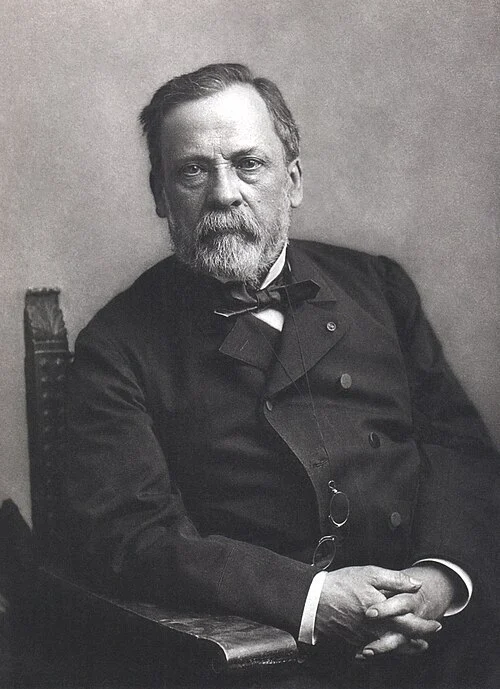
The record, plainly: that his faith drove the science is the strong version of this entry, and we decline to print the strong version. The documented version — a believer whose faith mattered daily — meets the bar at medium confidence. We grade our friends as strictly as our critics.
EVIDENCE VS. COUNTERFACTUAL
This is an interpretive synthesis: the sources support elements of the story, but the overall causal weight remains open to historical debate. Grade note: attribution or causal weight is contested; both sides are stated
The causal chain — tap (i) for detail
01A Catholic childhood and lifelong daily prayer Pasteur grew up in a Catholic environment, but claims about his precise adult devotional habits need stronger evidence than a familiar pious quotation or later anecdote. Family background, personal belief and church practice are distinct questions. This stage should establish the religious context cautiously, rather than using an uncertain story as the cause of his scientific achievements.
02Germ theory defeats spontaneous generation Pasteur's experiments investigated microorganisms and challenged accounts of spontaneous generation under the conditions tested. Their force came from experimental design and the interpretation of what entered or grew in the apparatus. These findings contributed to a changing understanding of fermentation and disease, rather than constituting a scientific demonstration of a particular religious belief.
03Pasteurization; the rabies and anthrax vaccines Applications of his work linked investigation with practical efforts to control spoilage and prevent disease. Pasteurization and vaccination involved different procedures, each requiring development and testing rather than a single discovery applied everywhere at once. Their importance lies in the demonstrable effects of those interventions, with religious biography supplying context rather than a substitute for technical explanation.
04Modern microbiology Microbiology developed through many researchers, instruments and medical institutions, with Pasteur occupying an influential place in that network. Later practice extended and corrected earlier work as new organisms and mechanisms became understood. This wider reception supports a claim of major scientific influence, while caution is needed before assigning that influence directly to a particular pattern of personal piety.