
Salem, 1692
“Beloved, do not believe every spirit, but test the spirits to see whether they are from God, for many false prophets have gone out into the world.”
— John · 1 John 4:1The 1692 Salem witch trials led to nineteen hangings and one death by pressing. A later day of fasting and repentance in 1697 included public acknowledgments of responsibility.
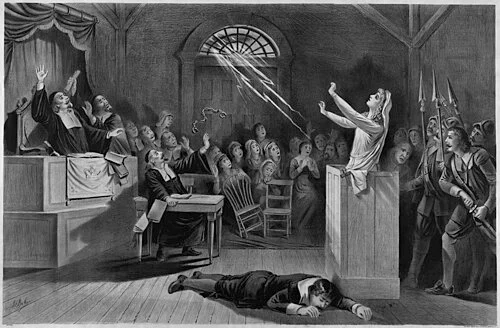
Image credit & licence
Joseph E., ca. 1837-1914, artist. · Public domain · This image is available from the United States Library of Congress's Prints and Photographs division under the digital ID ppmsca.09402.This tag does not indicate the copyright status of the attached work. A normal copyright tag is still required. See Commons:Licensing.
Original image and licensingThe 1692 crisis began with accusations of witchcraft and grew through proceedings that admitted spectral evidence: claims that an accused person’s apparition had caused harm. Nineteen people were hanged, and one man died under pressing after refusing to plead. Governor William Phips dissolved the special court in October 1692; subsequent proceedings restricted spectral evidence.
Massachusetts observed a day of fasting and repentance on 14 January 1697. Judge Samuel Sewall publicly acknowledged his responsibility, and jurors also issued an apology. These acts form part of the later reckoning, alongside further acknowledgments and efforts to repair the wrong. The sources document that particular day of repentance, not an annual observance, and do not support a claim that the entire community immediately accepted responsibility.
This label distinguishes a factual historical record from the interpretation built around it. A well-documented event or influence pathway does not prove that no alternative history could produce a similar result. Grade note: the historical record and pathway are especially well established
The court’s dissolution and the later apologies belong in the record alongside the executions. Christian ministers and participants disagreed about evidence and responsibility; the 1697 observance should not be presented as an annual ceremony or as proof of unanimous repentance.