
Vernacular Scripture
“but if I do not know the meaning of the language, I will be a foreigner to the speaker and the speaker a foreigner to me.”
— Paul · 1 Corinthians 14:11Luther's Bible and the King James Version shaped the German and English languages themselves.
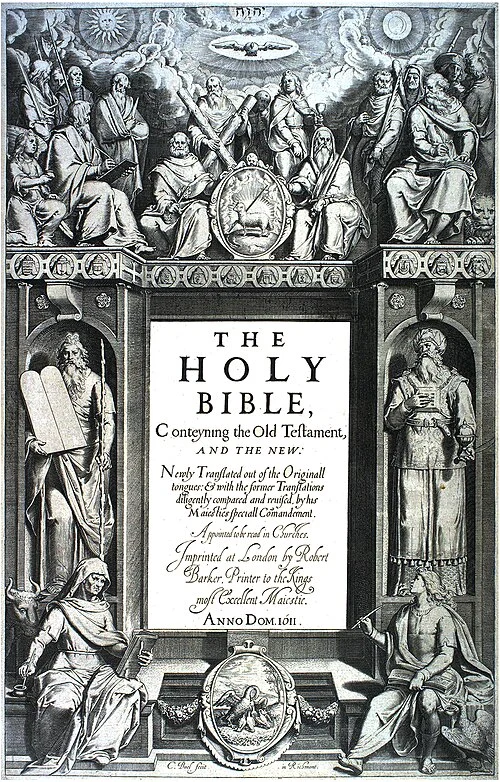
Image credit & licence
Church of England · Public domain · http://dewey.library.upenn.edu/sceti/printedbooksNew/index.cfm?TextID=kjbible&PagePosition=1 Color level (pick white point), cropped, and converted to JPEG (quality level 88) with the GIMP 2.6.6. Original jpgs from this source URL moved to http://hdl.library.upenn.edu/1017/d/print/1882817
Original image and licensingPaul insisted that worship be intelligible — a sentence in an unknown tongue helps no one. Eight centuries of that instinct ended in Luther's German and the King James English: translations so dominant that they standardized the languages themselves. A quarter of English's most familiar phrases entered through one 1611 book.
This label distinguishes a factual historical record from the interpretation built around it. A well-documented event or influence pathway does not prove that no alternative history could produce a similar result. Grade note: the influence pathway is well documented; replacement remains a separate question
Language-shaping had other giants too (Shakespeare for English); the Bible's share is documented by philology, not piety.