“For rulers are not a terror to good conduct, but to bad. Would you have no fear of the one who is in authority? Then do what is good, and you will receive his approval,”
— Paul · Romans 13:3
HIGH · EVIDENCE GRADE
The Commentaries that taught law on two continents open by defining law's authority in God's: the law of nature, he wrote, is dictated by God himself, and no human law is valid that contradicts it.
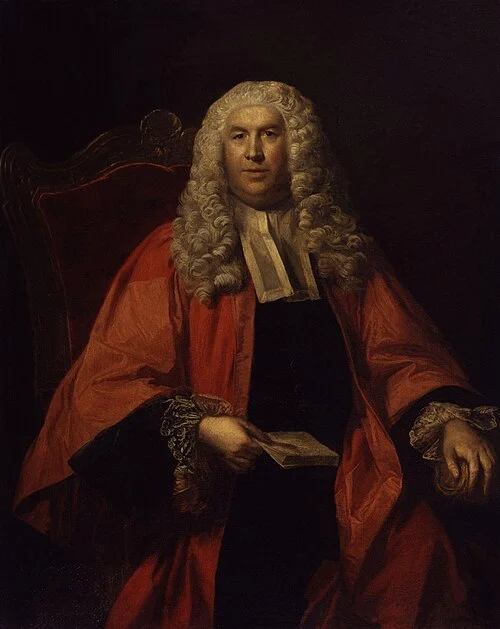
William Blackstone — the law's Christian frame
Image credit & licence
Unidentified painter · Public domain · one or more third parties have made copyright claims against Wikimedia Commons in relation to the work from which this is sourced or a purely mechanical reproduction thereof. This may be due to recognition of the "sweat of the brow" doctrine, allowing works to be eligible for protection through skill and labour, and not purely by originality as is the case in the United States (where this website is hosted). These claims may or may not be valid in all jurisdictions. As such, use of this image in the jurisdiction of the claimant or other countries may be regarded as copyright infringement. Please see Commons:When to use the PD-Art tag for more information.
The record, plainly: Blackstone also defended nearly every hanging offense on England's books — his piety did not soften his penal code. The influence claim and the criticism both stand.
EVIDENCE VS. COUNTERFACTUAL
This is an interpretive synthesis: the sources support elements of the story, but the overall causal weight remains open to historical debate. Grade note: the influence pathway is well documented; replacement remains a separate question
The causal chain — tap (i) for detail
01A devout Anglican lawyer Blackstone presented law within a framework that included divine and natural law as standards of obligation. This establishes a theological element in his account of legal authority, rather than requiring speculation about private devotion. The practical implications still depended on how he related those standards to the specific institutions and inherited rules of English law.
02The Commentaries on the Laws of England (1765–69) The Commentaries arranged English law into an accessible account that could be used beyond specialist professional training. Their clarity and structure helped readers encounter a complex legal tradition as an intelligible whole. This literary and educational achievement explains their circulation, alongside the authority of the law and institutions they described.
03Cited by American founders and courts for two centuries American readers and courts drew on Blackstone as an account of common-law principles, while also disputing or modifying particular positions. His citations therefore record selective reception, not universal agreement. A reference in a judgment must be considered for the proposition it supports rather than assumed to import his entire theological framework.
04The frame of common-law education The work became an important resource in legal education, shaping how students and general readers first approached English law. Later teaching developed other methods and challenged parts of its presentation. Its influence should therefore be described through identifiable use and response, without claiming that every modern classroom technique descends directly from Blackstone's lecture format.