“For you were called to freedom, brothers. Only do not use your freedom as an opportunity for the flesh, but through love serve one another.”
— Paul · Galatians 5:13
MED-HIGH · EVIDENCE GRADE
The political theory beneath the American founding — rights vested in us by our Creator, government by consent — was written by a Bible-soaked Protestant who also wrote The Reasonableness of Christianity.
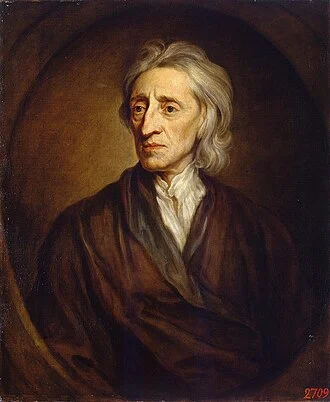
John Locke — liberty argued from a Protestant pen
Image credit & licence
Godfrey Kneller · Public domain · 1. arthermitage.org2. The Hermitage, St. Petersburg
The record, plainly: his toleration excluded Catholics and atheists, and his theology was thin enough to annoy every bishop he knew. The roots are real; the tree is his own.
EVIDENCE VS. COUNTERFACTUAL
This is an interpretive synthesis: the sources support elements of the story, but the overall causal weight remains open to historical debate. Grade note: a substantial pathway, with important contributing streams
The causal chain — tap (i) for detail
01A Puritan household and Scripture-saturated prose Locke's upbringing and writings locate him within Protestant debates about Scripture, authority and belief. Biblical engagement remained part of his intellectual work even where he argued philosophically. That background helps explain the questions he addressed, while a quotation or echo must still be interpreted in context rather than treated as proof of a single uncomplicated creed.
02Natural law as God's law, knowable by reason Locke grounded important claims about human equality and obligation in a created moral order accessible to reason. This supplied a standard against which political power could be judged. His framework joined theology and argument, but its scope, exclusions and practical commitments still require scrutiny rather than automatic identification with modern universal rights.
03Two Treatises of Government (1689) The Two Treatises challenged accounts of absolute rule and developed arguments about consent, property and resistance. Their influence grew through readers who adapted them to later disputes. The connection with Christianity is partly visible in Locke's premises and scriptural reasoning; it does not make every later liberal position a direct statement of his religious beliefs.
04Jefferson's their Creator stands on his shoulders American revolutionary arguments drew on Locke alongside other legal, religious and political sources. References to a Creator and unalienable rights can be compared with that intellectual inheritance, but they should not be presented as a verbatim borrowing of one philosopher's sentence. Reception involved selection and adaptation, including tensions between proclaimed equality and actual exclusion.