“but in your hearts honor Christ the Lord as holy, always being prepared to make a defense to anyone who asks you for a reason for the hope that is in you; yet do it with gentleness and respect,”
— Peter · 1 Peter 3:15
HIGH · EVIDENCE GRADE
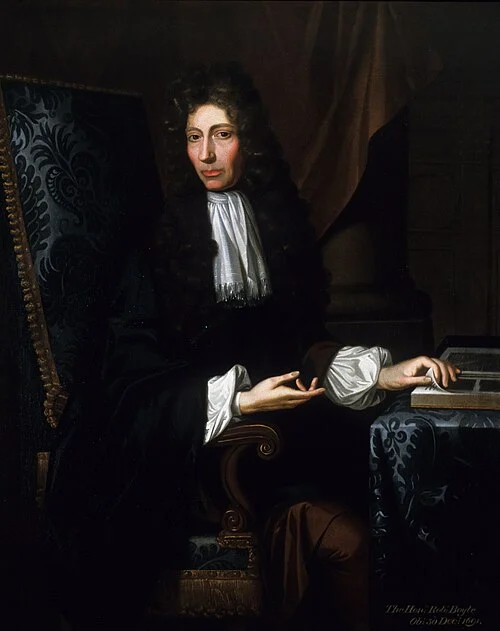
The founder of modern chemistry endowed a lecture series to defend Christianity publicly, funded the translation of the Bible into Irish, and wrote The Christian Virtuoso — the scientist as believer, defined by the man who built the science.
Robert Boyle — chemistry and the Christian Virtuoso
Image credit & licence
Johann Kerseboom · Public domain · https://digital.sciencehistory.org/works/3r074v879
The record, plainly: his Boyle Lectures attracted opportunists as well as scholars, and his argument style would not survive a modern peer review — the endowment, though, still runs.
EVIDENCE VS. COUNTERFACTUAL
This is an interpretive synthesis: the sources support elements of the story, but the overall causal weight remains open to historical debate. Grade note: the influence pathway is well documented; replacement remains a separate question
The causal chain — tap (i) for detail
01Chemistry's founding experimentalist Boyle's investigations of air, matter and experimental technique helped establish a demanding programme of natural inquiry. Instruments and repeatable demonstrations made claims open to scrutiny by other investigators. He worked within a wider community rather than inventing experimental science alone, and the religious part of his biography should be considered alongside that collaborative setting.
02The Christian Virtuoso (1690): science as devotion In The Christian Virtuoso, Boyle argued that investigating nature could support and express religious commitment. The book makes the connection between experiment and devotion explicit in his own reasoning. It is therefore evidence about how he understood scientific work, rather than a later attempt to assign a theological meaning to his discoveries.
03The Boyle Lectures endowed (1691) Boyle's bequest provided for lectures defending Christianity, translating a personal concern into a continuing public institution. The arrangement supported argument addressed to an audience beyond private devotion. Its existence demonstrates deliberate investment in religious debate, while the content and influence of particular lectures depend on the speakers and periods involved.
04The Irish Bible funded Support for Bible publication and translation connected Boyle's resources with the practical circulation of Scripture, including Irish-language work. This activity operated through translators, printers and readers rather than laboratory experiments. It supplies another documented expression of his religious priorities, whose results should be assessed separately from the scientific accomplishments for which he is best known.
05The science-and-faith tradition he started Later readers have used Boyle as an example in discussions of the relationship between science and Christianity. His writings and bequests offer substantial evidence for that association. They do not settle the relationship for every scientist or period, and the subsequent history of the lectures reflects new questions as well as continuity with their founder's aims.