
Without Jesus
Case WJ-V-02-01 · Concept
THE ATLAS›V · POLITICS›TWO POWERS — CHURCH & STATE›THE INVESTITURE CONFLICT

The Investiture Conflict

ENGLISH STANDARD VERSION (ESV)

“But Peter and the apostles answered, “We must obey God rather than men.”

— Peter · Acts 5:29
HIGH · EVIDENCE GRADEFACTUAL RECORD

Emperor against Pope over who appoints bishops — Europe learned that the state is not total.
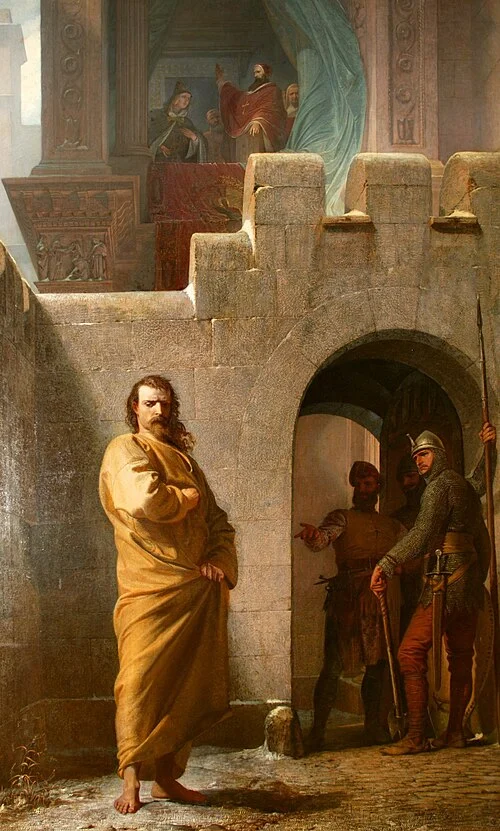
Canossa, 1077 — the emperor waits in the snow
Image credit & licence

Eduard Schwoiser (1826 — 1902) · Public domain · http://www.heiligenlexikon.de/Glossar/Investiturstreit.htm

Original image and licensing

Kings appointing bishops meant kings owning the church — land, courts, salvation. When Gregory VII forbade it, Henry IV crossed the Alps in winter and stood barefoot in the snow at Canossa for three days. Whatever the politics behind it, the image entered Europe's bloodstream: there is a line the crown cannot cross.

EVIDENCE VS. COUNTERFACTUAL

This label distinguishes a factual historical record from the interpretation built around it. A well-documented event or influence pathway does not prove that no alternative history could produce a similar result. Grade note: the influence pathway is well documented; replacement remains a separate question

STRONGEST OBJECTION(S)

The struggle was also a naked power contest, not a philosophy seminar; the precedent and the ambition came tangled together.

The causal chain — tap (i) for detail
01Canossa, 1077: the emperor waits in the snow Henry IV’s encounter with Gregory VII at Canossa made the conflict between royal and papal authority publicly visible. It concerned the political effects of ecclesiastical judgement as well as personal penance. The episode did not permanently settle their struggle or establish a modern division between religious and secular government.
02The Concordat of Worms (1122) The Concordat of Worms sought a negotiated arrangement over the appointment and investiture of bishops. Its importance lies in separating aspects of a contested office and recognising that neither side could simply absorb the other’s claims. It was a settlement within medieval institutions, not a charter of religious freedom in the contemporary sense.
03The precedent of jurisdictional limits on power The investiture struggle provides an example of rulers facing organised claims to an authority beyond their immediate command. That could create limits and competing jurisdictions, but also prolonged conflict. Any connection with later constitutional government must be traced through intervening developments rather than treating papal resistance as modern democracy already achieved.PRESENT DAY
Encounter the Gospel invitation →