
Two Powers — Church & State
“Jesus answered him, “You would have no authority over me at all unless it had been given you from above. Therefore he who delivered me over to you has the greater sin.””
— Jesus · John 19:11Render unto Caesar launched a thousand years of two-powers argument — a lineage running inside the modern settlement of church and state.
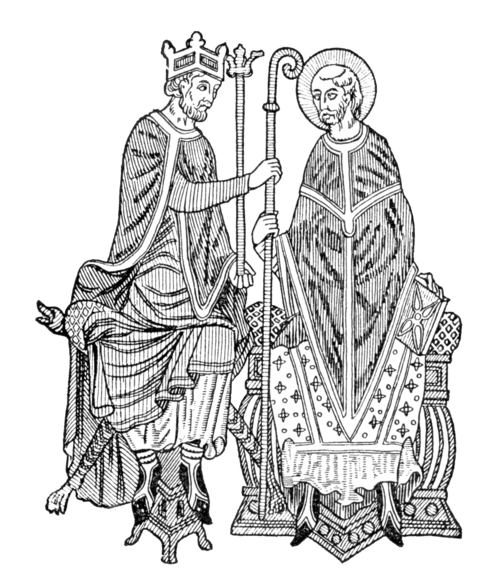
Image credit & licence
Original by Philip Van Ness Myers (d. 1937)Derivative version by ReneeWrites · CC BY 4.0 · This file was derived from: Investiturewoodcut.jpg
Original image and licensingBefore Jesus, the king and the god were usually the same office. His answer about the coin — some things are Caesar's, some things are God's — carved authority in two, and the two halves have been contesting the border ever since: a bishop telling an emperor he is not God's equal, an emperor standing barefoot in the snow for three days to end an excommunication.
The modern separation of church and state is usually told as the Enlightenment's achievement; it is also, at least half, the exhausted outcome of this thousand-year family argument. Both parents are claimed.
This label distinguishes a factual historical record from the interpretation built around it. A well-documented event or influence pathway does not prove that no alternative history could produce a similar result. Grade note: a substantial pathway, with important contributing streams
Separation also grew from weary pragmatism and religious wars (see Field XII) as much as from theology; the idea has several parents.