
The Civil Rights Movement
“And he made from one man every nation of mankind to live on all the face of the earth, having determined allotted periods and the boundaries of their dwelling place,”
— Paul · Acts 17:26The American civil-rights movement was organized in churches and preached in a preacher's cadence.
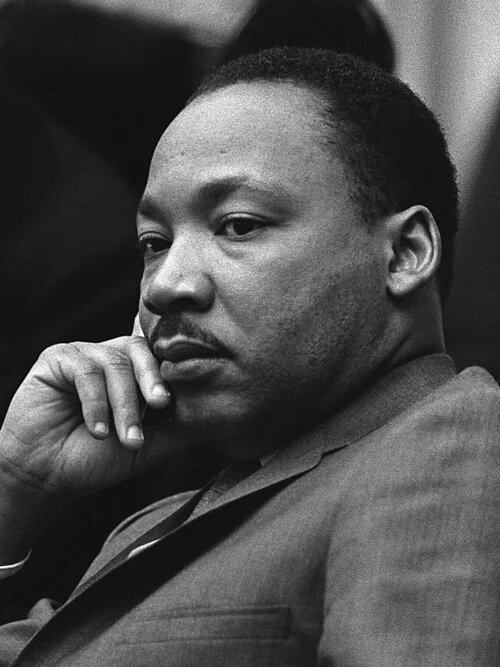
Image credit & licence
Yoichi Okamoto · Public domain · Lyndon Baines Johnson Library and Museum. Image Serial Number: A2133-10. http://photolab.lbjlib.utexas.edu/detail.asp?id=1083
Original image and licensingThe Montgomery bus boycott was planned in a church, funded by church collections, and led by a twenty-six-year-old pastor chosen because the ministers trusted him. The movement's mass meetings were worship services with an agenda; its discipline came from the pew; its oratory came from the pulpit. That is not a metaphor — the carpools and the budgets were church infrastructure.
Labor unions and secular radicals were there too, and the objection says so. But the meeting halls, the treasuries, and churches provided important infrastructure and leadership, though labour unions, secular organizations and other community networks also contributed.
This label distinguishes a factual historical record from the interpretation built around it. A well-documented event or influence pathway does not prove that no alternative history could produce a similar result. Grade note: the influence pathway is well documented; replacement remains a separate question
Labor unions and secular radicals were there too; but the meeting halls, the budgets and the leaders' formation were overwhelmingly ecclesial — that part is not seriously disputed.