“The second is this: ‘You shall love your neighbor as yourself.’ There is no other commandment greater than these.””
— Jesus · Mark 12:31
MED-HIGH · EVIDENCE GRADE
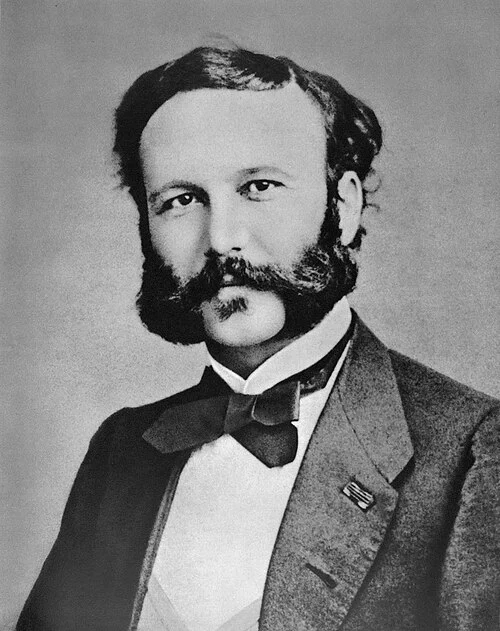
After the battle of Solferino left forty thousand wounded untended, a Calvinist from Geneva — who had earlier helped found the YMCA's world movement — helped found the Red Cross and the Geneva Convention, and took the first Nobel Peace Prize.
Henry Dunant — Solferino and the Red Cross
Image credit & licence
Frédéric Boissonnas · Public domain · Internet download
The record, plainly: he died in poverty after a banking scandal ended his business life; the founder of the world's mercy institution spent his last decades an exile from it. The ledger keeps both sentences.
EVIDENCE VS. COUNTERFACTUAL
This is an interpretive synthesis: the sources support elements of the story, but the overall causal weight remains open to historical debate. Grade note: a substantial pathway, with important contributing streams
The causal chain — tap (i) for detail
01A devout Geneva upbringing; organizer of the early YMCA Dunant's Genevan religious upbringing and participation in early YMCA organizing connected faith with voluntary association and service. These experiences gave him networks and practical familiarity with mobilizing people around a shared purpose. They help explain part of his preparation for humanitarian work without making the later institutions a simple extension of one devotional programme.
02Solferino, 1859: forty thousand wounded and no one to help them At Solferino, Dunant encountered the suffering left by battle and helped organize assistance with local people. His later account made that experience available to readers who had not been present. The important mechanism is the movement from immediate care to public testimony; casualty totals should not be confused with a count of wounded people personally treated.
03The Red Cross (1863) and the Geneva Convention (1864) Proposals for organized relief and protection of wounded soldiers developed through committees, diplomacy and agreement among states. Dunant's advocacy was important within that collective process, which produced the Red Cross movement and an early Geneva Convention. The resulting legal framework required more than compassion: it depended on institutions able to operate across opposing sides.
04The first Nobel Peace Prize (1901) The 1901 Nobel recognition marked the significance attached to Dunant's humanitarian contribution late in his life. An award belongs to the history of public reception, rather than serving as independent evidence for every claim in a biography. It highlights a career whose institutional consequences had grown far beyond the circumstances of the original battlefield encounter.