““Ask, and it will be given to you; seek, and you will find; knock, and it will be opened to you.”
— Jesus · Matthew 7:7
HIGH · EVIDENCE GRADE
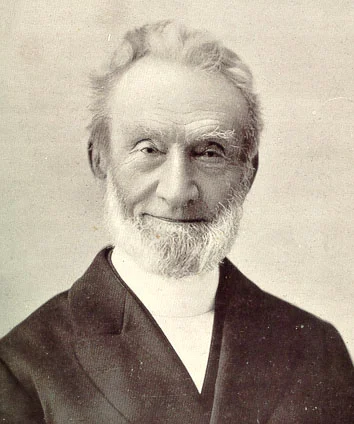
He raised ten thousand orphans in Bristol without ever once asking a person for money — he asked God, and kept his account books public so anyone could check the answers.
George Müller — the orphan houses of Bristol
Image credit & licence
Public domain · http://www.wheaton.edu/bgc/archives/treasure/tr98/98-01.jpg
The record, plainly: never asked meant never solicited directly — he did publish reports of needs, and skeptics then and now read the stream of gifts differently. The accounts are the accounts: the children were fed, housed and schooled for sixty-three years.
EVIDENCE VS. COUNTERFACTUAL
This is an interpretive synthesis: the sources support elements of the story, but the overall causal weight remains open to historical debate. Grade note: the influence pathway is well documented; replacement remains a separate question
The causal chain — tap (i) for detail
01A Prussian immigrant's conversion Müller's account of religious change presents a movement toward trust in God that later shaped his approach to service. Like other autobiographical narratives, it is evidence about how he interpreted his past and purpose. The connection with orphan care must then be followed through the institutions he established, rather than assumed from the conversion story alone.
02The Ashley Down orphan houses, from 1836 Beginning with rented premises and later expanding at Ashley Down, the Bristol work required buildings, staff, food, education and sustained administration. That practical scale is important to understanding the undertaking. Its religious purpose did not remove ordinary organizational demands, and children's experiences should remain visible alongside a founder's account of provision.
03No solicitation; published accounts; tens of thousands of specific answered prayers recorded in his Narratives Published narratives and accounts made the work's income, needs and religious interpretation available to supporters. Müller attributed provision to answered prayer, while readers could also examine donations and expenditure as records of an operating charity. Those are related but distinct kinds of evidence: financial documentation does not by itself establish the theological explanation for every gift.
04Over 10,000 children housed and educated The cumulative number of children assisted records the institution's reach across time, not the population of one household at a single moment. Education and preparation for later life were part of the claimed purpose alongside accommodation. Assessing the legacy therefore requires both scale and quality, including how well the institution met the needs of individual children.