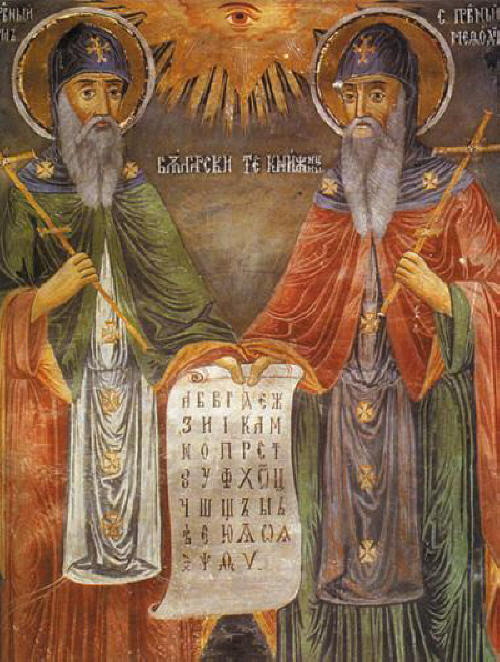
A command to reach every creature, plus a Book that must be heard in the hearer's own tongue, produced something odd: wherever missionaries went, they had to become linguists — inventing alphabets for languages that had never been written, writing their grammars, their dictionaries, their first books. Hundreds of languages exist today in writing because two men in the ninth century started the pattern for the Slavs.
The entanglement is printed honestly: the same linguistics served colonial administration, and some scripts died with the languages they were made for. The preservation is real, and so is the shadow (Field XII).
EVIDENCE VS. COUNTERFACTUAL
This label distinguishes a factual historical record from the interpretation built around it. A well-documented event or influence pathway does not prove that no alternative history could produce a similar result. Grade note: the influence pathway is well documented; replacement remains a separate question
STRONGEST OBJECTION(S)
Mission linguistics also served colonial control, and some scripts died with the languages they were made for; the preservation is real, and so is the entanglement (Field XII).
The causal chain — tap (i) for detail
01A Gospel that must cross languages Christian translation begins with a practical problem: a message must be intelligible in the language of its hearers. Translators may therefore study grammar, develop writing conventions or prepare teaching materials. These activities can create lasting records, while raising questions about whose language, terminology and authority shape the resulting texts.
02Wulfila's Gothic alphabet (4th c.) Wulfila’s work in the fourth century is associated with a Gothic alphabet and the translation of biblical texts. Religious communication provided the purpose for that project. The surviving material is also important to the study of Gothic, showing how a work intended for a faith community can acquire wider linguistic significance.
03Cyril and Methodius — Glagolitic and Cyrillic (9th c.) Cyril and Methodius’s mission involved making Christian worship accessible in a Slavic language. Glagolitic is associated with their work; Cyrillic developed later within the wider tradition shaped by their disciples. Keeping those stages distinct avoids attributing two different scripts to one moment or treating subsequent development as unchanged from the beginning.
04Thousands of modern translation projects Translation projects continue to require decisions about vocabulary, writing and teaching. Their linguistic effects depend on collaboration with the communities using the languages. Such projects can support literacy and textual resources, but their impact is not automatically uniform; local participation and the wider educational setting matter.
05Written records of formerly oral cultures Written translations, grammars and teaching materials may preserve evidence later readers can study. They do not replace a language’s oral traditions or make the translator its owner. The contribution lies in specific resources understood alongside local knowledge and the effects of religious and colonial encounters.