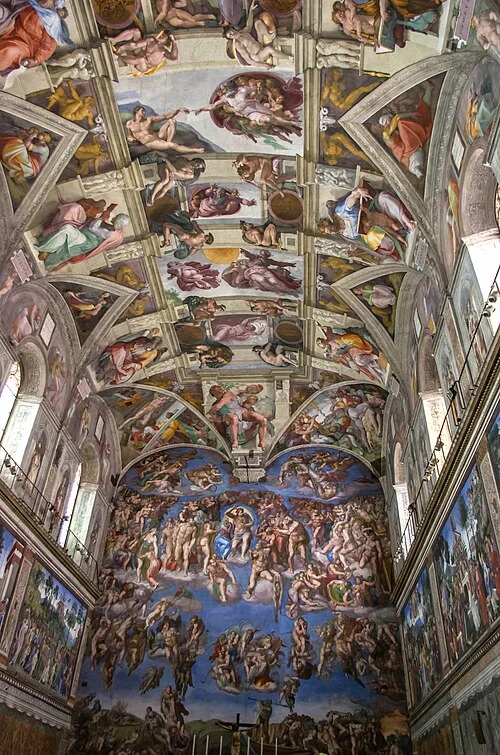
A sculptor who insisted he was not a painter, standing on scaffolding his own design, made the creation of the world visible on a ceiling — and then, thirty years later, the end of it on the wall behind the altar. Five centuries of visitors have looked up into Genesis.
EVIDENCE VS. COUNTERFACTUAL
This label distinguishes a factual historical record from the interpretation built around it. A well-documented event or influence pathway does not prove that no alternative history could produce a similar result. Grade note: the historical record and pathway are especially well established
STRONGEST OBJECTION(S)
The ceiling is Genesis, and the wall is the Last Judgment; a hostile critic could say Michelangelo's genius needed any great subject. The commission is what the Church gave him.
The causal chain — tap (i) for detail
01Julius II's commission Julius II commissioned Michelangelo to paint the Sistine Chapel ceiling, bringing a major artist into the service of a working papal chapel. Patronage supplied the money, setting and religious programme for the undertaking. The first link is therefore a specific church commission, rather than a general resemblance between religious belief and artistic ambition.
02Genesis rendered for the papal chapel The ceiling gives the creation, fall and flood a monumental visual form, surrounded by figures that connect the scenes to a wider Christian reading of Scripture. Viewers encounter biblical history through bodies, colour and architectural illusion. Its subject matter helped determine the composition, so the religious content is part of the work's structure as well as its setting.
03Five centuries as painting's reference point Later artists and visitors studied Michelangelo's figures, scale and handling of the human body, carrying the ceiling's influence beyond the chapel. Reproduction and art education widened that reception further. This establishes a lasting Christian commission within the history of painting without requiring every later admirer to share its theology.PRESENT DAY