
Visual Arts
“He is the image of the invisible God, the firstborn of all creation.”
— Paul · Colossians 1:15For a millennium and a half, the dominant subject of Western art was the life of Christ.
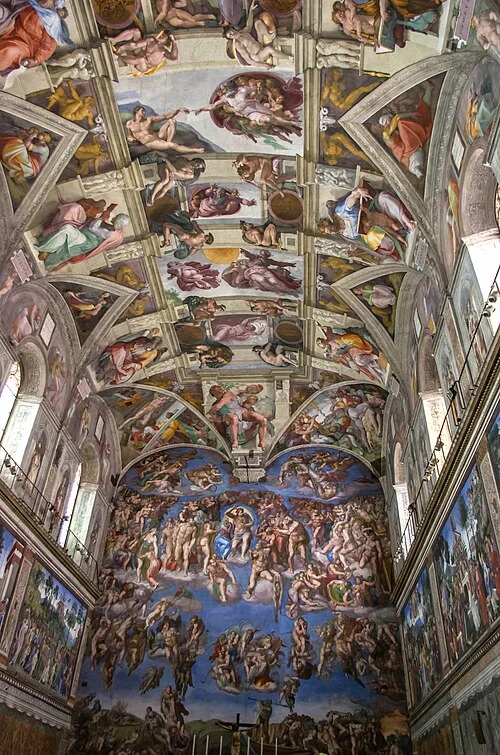
Image credit & licence
Antoine Taveneaux · CC BY-SA 3.0 · File:Sistine_Chapel_ceiling_02.jpg
Original image and licensingOther religions forbade the image; this one, because its God became visible, commissioned it. From the catacombs to Byzantine icons to the Sistine ceiling, the visual grammar of the West — how to show suffering, tenderness, glory, a face that matters — was developed almost entirely in the service of one subject.
The patronage objection is printed and answered honestly: yes, the Church was the biggest wallet in Europe, and yes, remove the theology and much art still gets made. But it gets made with different subjects, in different forms — and the volume that exists is the volume this claim rests on.
This label distinguishes a factual historical record from the interpretation built around it. A well-documented event or influence pathway does not prove that no alternative history could produce a similar result. Grade note: the historical record and pathway are especially well established
The Church was also simply the biggest patron with money; remove the theology and keep the patron, say the skeptics, and much art still gets made — with different subjects. The volume claim survives the objection; the counterfactual on quality does not, and we do not claim it.