
Without Jesus
Case WJ-VII-02-02 · Concept
THE ATLAS›VII · ARTS & MUSIC›MUSIC›SPIRITUALS → SOUL

Spirituals → Soul

ENGLISH STANDARD VERSION (ESV)

“Come to me, all who labor and are heavy laden, and I will give you rest.”

— Jesus · Matthew 11:28
VERY HIGH · EVIDENCE GRADEFACTUAL RECORD

From Amazing Grace through the gospel choir into soul, blues and jazz — the family tree of modern popular music runs through the Black church.
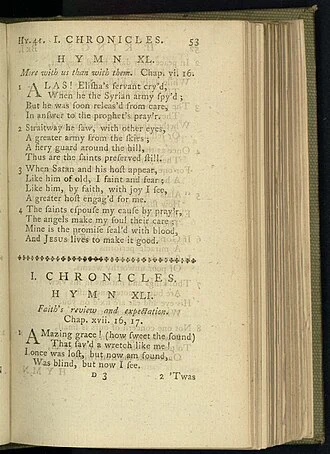
Amazing Grace — the former slaver's hymn
Image credit & licence

Olney Hymns was published by John Newton and William Cowper; the image is hosted at the U.S. Library of Congress · Public domain · U.S Library of Congress and

Original image and licensing

The enslaved took the Exodus story for their own, and sang it — Go Down, Moses — because it was the one text in the slaveholder's Book that was on their side. The sorrow songs became the spirituals, the spirituals became gospel, and gospel's harmonic and vocal grammar walked out of the church into rhythm-and-blues, soul, and everything downstream of them.

The juke joint fed the river too — the ministers said so loudly — and both banks are documented. But the family tree's trunk runs through the pews.

EVIDENCE VS. COUNTERFACTUAL

This label distinguishes a factual historical record from the interpretation built around it. A well-documented event or influence pathway does not prove that no alternative history could produce a similar result. Grade note: the historical record and pathway are especially well established

STRONGEST OBJECTION(S)

Blues also ran through the juke joint, and the ministers said so loudly; the two buildings fed one river, and both banks are documented.

The causal chain — tap (i) for detail
01The sorrow songs of the enslaved Enslaved African Americans gave biblical stories, especially deliverance from bondage, a powerful place in spiritual song. The songs joined inherited African musical practices, Christian language and the experience of oppression. Their meaning was not exhausted by the slaveholder's use of the Bible; singers could voice hope, grief and resistance through the same text.
02Gospel's harmonic and vocal grammar Black gospel developed distinctive performance traditions around congregations, choirs, soloists and religious testimony. Call and response, expressive delivery and the interaction of singer and community became resources musicians could carry into other settings. Gospel belongs within a changing musical landscape, rather than serving as the sole source of every technique it employed.
03Soul, blues, jazz — the secular children Performers moved between sacred and commercial music, bringing recognizable vocal approaches and musical phrases into popular recordings. Soul has especially visible connections with gospel, while blues and jazz also drew on other substantial traditions. The influence is best traced through particular musicians and performances, not reduced to a single straight family tree.PRESENT DAY
Encounter the Gospel invitation →