“The light shines in the darkness, and the darkness has not overcome it.”
— John · John 1:5
HIGH · EVIDENCE GRADE
One of the best-selling books ever written, by a Catholic who called The Lord of the Rings a fundamentally religious and Catholic work in his own letters — the mythos of creation, fall and grace worn as a disguise so complete that readers thought it was only a story.
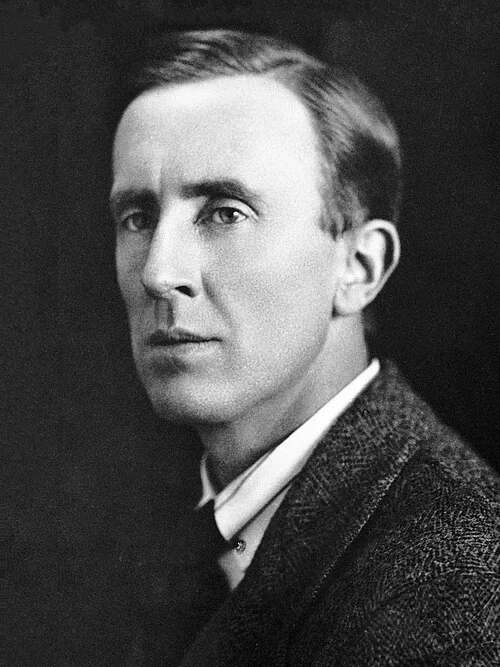
J. R. R. Tolkien
Image credit & licence
Unknown photo studio commissioned by Tolkien's students 1925/6 (private communication from Catherine McIlwaine, Tolkien Archivist, Bodleian Library) · Public domain · Epistle of Dude, Photos from the lives of C.S. Lewis and J.R.R. Tolkien, probably originally sourced from John Garth, Tolkien and the Great War.
The record, plainly: he disliked allegory, resisted the label Christian novel, and would have disliked this entry's phrasing; his letters say the thing anyway, and we quote his words, not our wish.
EVIDENCE VS. COUNTERFACTUAL
This is an interpretive synthesis: the sources support elements of the story, but the overall causal weight remains open to historical debate. Grade note: the influence pathway is well documented; replacement remains a separate question
The causal chain — tap (i) for detail
01Trenches of the Somme; a Catholic from childhood Tolkien's Catholic formation and experience of war were among the lasting contexts of his imaginative life. Particular memories can illuminate aspects of the fiction, but the work also drew on language, older literature and decades of invention. A biographical connection should therefore open interpretation rather than turn the story into a sequence of one-to-one personal references.
02The Inklings; the friendship with Lewis Friendship and conversation with Lewis created opportunities to discuss myth, belief and the relationship between story and truth. Tolkien was important to that exchange, which also involved other people and influences. The connection documents intellectual companionship, not a simple transfer in which one writer supplied the entirety of another's conversion or creative programme.
03The Lord of the Rings (1954–55) The Lord of the Rings presents temptation, mercy, courage and the limits of power through an invented history rather than explicit Christian worship. Those themes can be read in relation to Tolkien's faith without assigning every character a single biblical equivalent. The story's religious significance emerges through its structure and moral choices as well as authorial explanation.
04Modern fantasy's moral architecture — his letters name its source Tolkien's description of the work as fundamentally religious and Catholic provides unusually direct evidence for discussing its relation to his faith. That statement guides interpretation but does not require readers to discover a fixed allegorical code. Its later influence on fantasy also involved language, world-building and narrative craft, alongside the moral concerns identified by its author.