“Then the seventh angel blew his trumpet, and there were loud voices in heaven, saying, “The kingdom of the world has become the kingdom of our Lord and of his Christ, and he shall reign forever and ever.””
— John · Revelation 11:15
VERY HIGH · EVIDENCE GRADE
Messiah (1741) — Scripture assembled by his librettist, composed in about three weeks, performed for charities including the Foundling Hospital, and still the most-performed oratorio on earth.
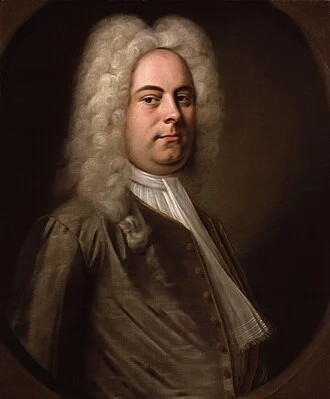
G. F. Handel
Image credit & licence
Attributed to Balthasar Denner · Public domain · one or more third parties have made copyright claims against Wikimedia Commons in relation to the work from which this is sourced or a purely mechanical reproduction thereof. This may be due to recognition of the "sweat of the brow" doctrine, allowing works to be eligible for protection through skill and labour, and not purely by originality as is the case in the United States (where this website is hosted). These claims may or may not be valid in all jurisdictions. As such, use of this image in the jurisdiction of the claimant or other countries may be regarded as copyright infringement. Please see Commons:When to use the PD-Art tag for more information.
The record, plainly: he was an opera man with debts and a temper before he was an oratorio man with a benefit habit; the charity performances were as calculated as they were generous — and they fed children.
EVIDENCE VS. COUNTERFACTUAL
This is an interpretive synthesis: the sources support elements of the story, but the overall causal weight remains open to historical debate. Grade note: the historical record and pathway are especially well established
The causal chain — tap (i) for detail
01Charles Jennens's Scripture libretto Jennens's selection of biblical passages supplied Handel with a sequence of religious ideas rather than a newly invented dramatic dialogue. The texts move through expectation, suffering and triumph in a form suited to reflection as well as performance. This collaboration is essential to the work's Christian character; the composer did not create its verbal programme alone.
02The white-heat composition, 1741 The concentrated work on the score in 1741 transformed that programme into contrasting musical forms and voices. The dated manuscript helps establish the period of composition, while later revisions remind readers that a first draft is not the whole performance history. Its speed matters less than how effectively the music gave the selected texts expressive shape.
03Foundling Hospital benefit performances, year after year Handel's continuing support for Foundling Hospital performances connected a major public work with a charitable institution. Those events followed the Dublin premiere and should not be confused with it. Repeated benefits helped make Messiah useful within the financial and social life of organized care, adding another dimension to its religious and musical reception.
04The most-performed oratorio in history Choirs and audiences have kept Messiah in circulation through changing performance practices, venues and traditions. Its familiarity rests on that continuing work of rehearsal, interpretation and public participation. It is safe to describe an exceptionally enduring oratorio; a claim that it outranks every other work in all performance totals would need a defined, comprehensive measure.