
Jesus in Islam
“so that at the name of Jesus every knee should bow, in heaven and on earth and under the earth, and every tongue confess that Jesus Christ is Lord, to the glory of God the Father.”
— Paul · Philippians 2:10-11Jesus ('Isa) is a major figure in Islamic scripture and theology; Islam as historically known includes a portrayal of Jesus and would therefore be different without him.
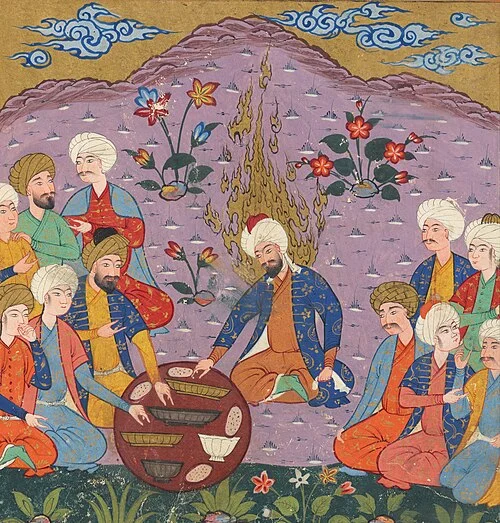
Image credit & licence
Public domain · https://digitalcollections.nypl.org/items/9e65de90-c6cc-012f-8caf-3c075448cc4b#/?uuid=d304a860-a153-0135-63e1-05dec81b5a8f
Original image and licensingThe Qur'an gives Jesus a virgin birth, calls him Messiah and Word, and names him in roughly twenty-five verses — while declining, explicitly, the church's claim about who he was. That combination — supreme honor, different verdict — is itself the datum: a second world religion is built with him load-bearing in its structure.
The influence claimed here is presence, not agreement. Since Islam developed centuries later and its scripture includes Jesus, Islam as historically known would be different in a world without Jesus; the precise alternative history cannot be established.
This label distinguishes a factual historical record from the interpretation built around it. A well-documented event or influence pathway does not prove that no alternative history could produce a similar result. Grade note: the historical record and pathway are especially well established
Muslim reverence is precisely not the Christian claim, and conflating them insults both traditions; the influence claimed is presence, not agreement.